Learn about electrical landlord certificates and your legal duties, including inspections, safety checks, repair timescales, and how to stay compliant as a landlord.
What the Law Says About Electrical Checks for Landlords
In England, landlords must make sure the electrical installation in a rented home is safe. The current guidance says landlords must have the fixed electrical installation inspected and tested by a qualified person at least every five years.
They must then obtain a report, usually an Electrical Installation Condition Report, and give copies to tenants and to the local council if asked. The official guidance also makes clear that these rules apply to England, so landlords in Scotland, Wales, or Northern Ireland should check the rules for their own nation separately.
The law is about the fixed electrical parts of the property, not just loose appliances. That includes wiring, sockets, light fittings, the consumer unit, and permanently connected items such as showers and extractors.
The standard landlords must meet is set out in the 18th Edition of the Wiring Regulations, also known as BS 7671. In simple terms, the duty is not only to react when something goes wrong. It is to have the system checked in good time and to keep proof that this has been done.
Which Properties Need an Electrical Landlord Certificate
In England, the rules apply widely to rented homes where the tenant has the right to occupy the property as their only or main residence and pays rent. The guidance also says that, for these rules, the word tenancy includes a licence to occupy. That means the duty can cover more than the most standard tenancy agreement. For many landlords, the practical result is simple. If you are renting out a home for someone to live in as their main home, you should assume electrical safety checks are likely to matter.

The guidance also lists some excluded tenancies. These include shared accommodation with the landlord or the landlord’s family, long leases of seven years or more, student halls of residence, hostels and refuges, care homes, hospitals and hospices, some other healthcare accommodation, and mobile homes, caravans, and boats. So, while the rules are broad, they do not cover every type of living arrangement.
Houses in multiple occupation can still fall within the rules where people from different households share facilities such as kitchens or bathrooms.
The guidance also says the regulations do not apply to communal areas of a building, such as shared stairwells or corridors, although landlords may still have duties in those areas under other housing law.
That means a landlord may need to think about both the rented home itself and any wider safety duties that sit outside these regulations.
How Often Landlords Need an Electrical Inspection
The general rule in England is that the electrical installation must be inspected and tested at least every five years. The report should also set a date for the next inspection and test. That means five years is the outer limit in many cases, but the report itself may say the next check should happen sooner. Landlords should follow the date given on the report rather than treating five years as an automatic fixed period in every case.
The guidance also says a fresh inspection is not required before each new tenancy if a valid report already exists, the inspection was carried out less than five years ago, and the report does not call for further investigative or remedial work.
In that situation, the landlord can give the new tenant a copy of the most recent report instead. Even so, the guidance recommends at least a visual check before a new tenancy starts, to make sure no damage or deterioration has happened since the last inspection.
What Happens During an Electrical Safety Check
During the inspection, the qualified person checks the fixed electrical installation in the property. The guidance says this includes things such as the wiring, socket-outlets, light fittings, the consumer unit, permanently connected items like showers and extractors, and even circuits provided for specialist equipment such as solar PV systems and battery storage. The aim is to assess whether the installation is safe for continued use.
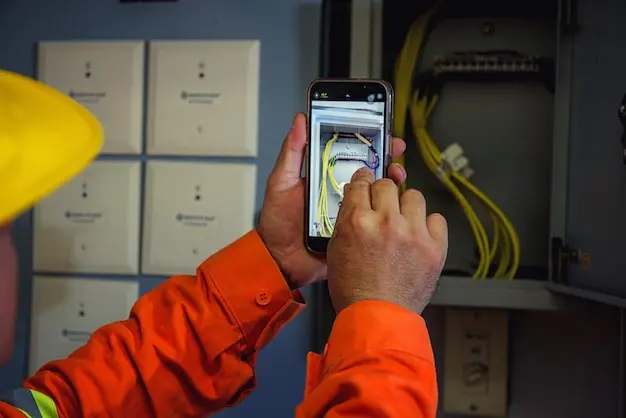
The inspection looks for clear risks and hidden faults. According to the government guidance, the check is meant to find out whether any installations are overloaded, whether there are electric shock risks or fire hazards, whether there is defective electrical work, and whether there is a lack of earthing or bonding.
This matters because many serious electrical faults are not obvious to a landlord or tenant just by looking around the property.
Once the check is complete, the landlord should receive a report, usually an EICR, explaining the outcome and noting any work that is needed. The report uses classification codes.
C1 means danger is present and there is a risk of injury. C2 means potentially dangerous. FI means further investigation is required without delay. C3 means improvement is recommended, but it does not by itself make the report unsatisfactory. If C1, C2, or FI appears, the landlord should expect further action to be needed.
Who Can Carry Out the Inspection
The law says the inspection and testing must be carried out by a qualified person. The guidance explains this as a person who is competent to undertake the inspection and testing and any further investigative or remedial work in line with the electrical safety standards. In simple terms, this is not a job for guesswork or a quick look from someone without the right training and experience.
The government guidance points landlords towards industry sources that can help them find a suitable electrician, including the Registered Competent Person Electrical register and Electrical Safety First’s registered electrician search. That does not mean every electrician offers the same level of service, so landlords should still make sure the person they choose is experienced in inspection and testing, not only in general electrical work.
What the Report Means for Landlords
The report tells the landlord whether the installation is satisfactory for continued use and whether any more work is required. If the report does not call for investigative or remedial work, the guidance says the landlord will not need to carry out further work at that stage. That gives the landlord a clear record that the system has been checked and what date the next inspection should take place.
If the report contains C1 or C2 observations, or says further investigation is needed, the installation is treated as unsatisfactory for continued use until the necessary action has been taken. C3 is different.
The guidance says C3 means improvement is recommended, but it does not mean remedial work is required for the report to count as satisfactory. That distinction is important because some landlords hear that a report has observations on it and assume the whole property has failed in the same way. The classification codes help show the real level of urgency.
For landlords, the report is therefore more than a certificate to file away. It is a working document that tells you what needs doing, how urgent it is, and when the next check should happen. It should also be kept until the next inspection is required, or later if a newer report has not yet replaced it. The next inspector should also be given a copy.
What to Do If the Report Finds Problems
If the report shows that remedial work or further investigation is needed, the landlord must arrange for that work to be done. The guidance says this must be completed within 28 days, or sooner if the report gives a shorter period. So a landlord should not leave an unsatisfactory report sitting in a file and deal with it later when convenient.
After the work is finished, the landlord must provide the tenant and the local council with the report and written confirmation from the qualified person who carried out the work within 28 days of completion. The guidance says acceptable written confirmation can include a satisfactory EICR, an Electrical Installation Certificate, a Minor Electrical Installation Works Certificate, or other suitable electrical certification.
The guidance also recognises that, in some cases, work may be delayed by genuine practical problems, such as specialist work, third-party involvement, or tenant-specific circumstances. In those cases, a landlord is not in breach if they can show they took all reasonable steps to comply. Clear records of communication and arrangements matter a great deal if there is any delay.
Time Limits for Repairs and Follow-Up Work
The timing rules are strict enough that landlords should know them clearly. Existing tenants must receive a copy of the report within 28 days of the inspection and test. New tenants must receive a copy before they occupy the property. If a prospective tenant asks for a copy, it must usually be supplied within 28 days of the request. If the local council asks for the report, it must usually be supplied within seven days.

Where the report shows that remedial work or further investigative work is needed, the landlord must normally complete that work within 28 days, or faster if the report says so.
Then, within 28 days of the work being completed, the landlord must give the tenant and the local council the report and written confirmation that the work has been done. These dates are important because compliance is not only about ordering the work. It is also about passing on the paperwork on time.
If urgent remedial action is required and the landlord does not carry it out within the period set by the report, the local council may, with the tenant’s consent, arrange the work itself.
The council can then recover the cost from the landlord. That makes the timetable more than an administrative detail. Missing deadlines can quickly turn into enforcement and extra cost.
When to Give the Certificate to Tenants
Landlords must give the report to existing tenants within 28 days of the inspection and test. They must also give a copy to a new tenant before that tenant moves in. If a prospective tenant asks for the report, the landlord must normally provide it within 28 days of the request. These time limits come straight from the official guidance and are a key part of the landlord’s duty, not an optional extra.
If the report later leads to remedial work or further investigation, the follow-up paperwork matters too. The landlord must provide the tenant with the report and written confirmation once the required work has been completed. This keeps the tenant informed not only that a check has taken place, but also that any identified safety issues have been dealt with properly.
What Documents Landlords Should Keep
Landlords should keep the electrical report itself and any follow-up paperwork linked to repairs or further investigation. The guidance says a landlord must retain a copy of the report until the next inspection and test is required or carried out, unless it has already been replaced by a more recent report. The next inspector should also be given a copy.
Where remedial work has been carried out, landlords should also keep the written confirmation provided by the qualified person. The guidance says this may be a satisfactory EICR, an Electrical Installation Certificate, a Minor Electrical Installation Works Certificate, or another suitable form of electrical certification. Keeping these records in one place makes it much easier to show that the property has been checked, that problems were dealt with, and that deadlines were met.
The official guidance also says that if access problems or practical delays prevent a landlord from meeting a duty straight away, records of communications and steps taken can help show that all reasonable steps were taken. So good paperwork is not only helpful for organisation. It can also protect the landlord if there is ever a dispute about compliance.
What Happens If You Do Not Meet Your Legal Duties
If a landlord does not comply, the local council can take action. The guidance says that where a council has reasonable grounds to believe a landlord is in breach, it can serve a remedial notice requiring action. If the landlord still does not comply, the council may arrange the remedial work itself and recover the costs from the landlord. In urgent cases involving electrical installations, the council may arrange urgent remedial action, with the tenant’s consent, if the landlord has not acted in time.
There can also be financial penalties. The current government guidance says local councils may impose a financial penalty of up to £40,000 on landlords who are in breach of specified duties under the regulations. Landlords do have rights to make representations and to appeal, but that does not change the fact that non-compliance can be expensive as well as risky for tenant safety.
In some situations, tenants may also have other legal routes if a home is unsafe due to faulty electrics. The guidance notes that some tenants can rely on the Homes (Fitness for Human Habitation) Act 2018 to take action through the courts. So the consequences of ignoring electrical duties can go beyond one inspection and one penalty.
How to Stay Compliant as a Landlord
The best way to stay compliant is to treat electrical safety as a planned part of managing the property. Arrange inspections in good time, use a qualified person, keep the report safely, and note the next inspection date as soon as the current one is issued. If a report calls for repairs or further investigation, book the work quickly and keep written proof once it is done.
It also helps to stay organised with tenant documents. Existing tenants should receive the report within 28 days, new tenants should receive it before moving in, and any council request should be answered within seven days. Before a new tenancy, even where a fresh inspection is not legally required because a valid report already exists, the guidance recommends at least a visual check to make sure the property still appears electrically safe.
One final point matters. This article is based on the current rules and guidance for England. If your property is elsewhere in the UK, or if your tenancy type is unusual, check the rules for that nation and the exact type of letting before you rely on a general summary. For English landlords, though, staying compliant usually comes down to four things: inspect on time, act on the report, keep the paperwork, and give the right documents to the right people by the proper deadlines.
Get professional Electrical Landlord Certificates in Wolverhampton and the West Midlands. We inspect, test, and certify your property's wiring to ensure safety and compliance with regulations.